Born in Ghent on 24 February 1500, Charles of Habsburg entered the world already encumbered by the ambitions of four royal lines. His maternal grandparents were Ferdinand and Isabella of Spain. His paternal grandparents were Maximilian I, Holy Roman Emperor, and Mary of Burgundy. No European child before him had inherited so many incompatible crowns from so many directions at once, and the collision that resulted would define not just his reign but the shape of European statecraft for the century that followed. His empire was the largest any Christian monarch had yet assembled, stretching from Castile and Aragon through the Low Countries, the Holy Roman Empire, Naples, Sicily, and the Americas. It was also, from the very first year, nearly impossible to govern.
Who Was Charles V and What Did He Actually Inherit?
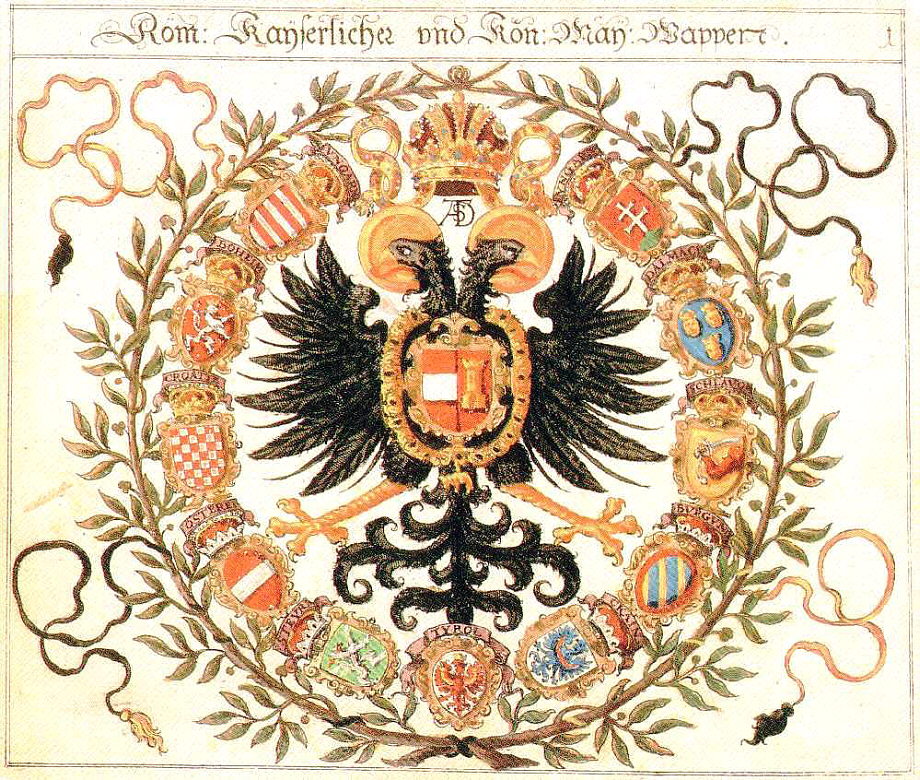
Charles V was the convergence point of four dynastic inheritances that arrived in sequence before he turned twenty, and the sheer accumulation explains both his power and his perpetual crisis. Through Isabella of Castile and Ferdinand of Aragon, he received the Iberian crowns along with their Italian possessions and the expanding colonial enterprise in the Americas. Through Mary of Burgundy, he received the Low Countries, among the wealthiest commercial territories in Europe. Through Maximilian I, he received the Austrian hereditary lands: the Archduchy of Austria, Styria, Carinthia, Tyrol, and the rest of the central European Habsburg patrimony.
The Spanish inheritance arrived first. His mother Joanna, nominally queen of Castile, was deemed incapable of ruling, and Charles was recognized as king in 1516. He was sixteen. He had never been to Spain. He did not speak Spanish. He arrived in 1517 with a Flemish court that immediately antagonized the Castilian nobility by monopolizing royal appointments and routing tax revenues northward.
The imperial title was different. It was elective, not hereditary, and securing it required something more than genealogical luck.
The 1519 Imperial Election Was a Purchase, Not a Mandate
On 28 June 1519, Charles was elected Holy Roman Emperor in Frankfurt. The election had been decided six weeks earlier, in the accounting ledgers of the Fugger banking house of Augsburg. The imperial title cost roughly 850,000 florins in payments to the seven prince-electors, a sum the Fuggers financed on the calculation that a Habsburg emperor was a more reliable debtor than his main rival, Francis I of France. Papal election materials and the Fugger family archive document the disbursements to each elector in detail. Francis I had also bid heavily, but the Fuggers chose the Habsburg.
The political cost was equally significant. Charles signed a 36-point electoral capitulation before the vote, pledging to uphold princely prerogatives, conduct imperial business in German, and consult the Electors on major decisions. The divine mandate that would underpin his universalist ideology was, at its foundation, a financial transaction with contractual strings attached.
How Charles V's Burgundian Upbringing Set Him Against His Spanish and German Subjects
Charles arrived in Castile in 1517 speaking French, surrounded by Flemish advisors who monopolized appointments and drained revenues northward, and the Castilian reaction was immediate. The Comuneros revolt of 1520 to 1521 was not a minor disturbance. It was a genuine insurrection by urban communes and noble factions who regarded their new king as a foreign occupier with no particular interest in Castile beyond its tax base. Charles's Burgundian formation had given him a cosmopolitan dynastic style that read, in both Spain and Germany, as foreign, centralizing, and insufficiently local.
He suppressed the revolt militarily, but the episode forced a lasting recalibration. He learned Spanish. He shed the most conspicuous Flemish favorites. Over the following decade he became, paradoxically, the most Spanish of the Habsburg emperors, spending more time in Castile than in any other territory and eventually choosing to die there. Geoffrey Parker's biography describes this shift as a deliberate political adaptation: Charles recognized, after 1522, that he had to give Spain precedence and rule it in a Spanish way rather than a Burgundian one.
The same cultural friction operated in Germany, though the consequences there proved harder to manage. His Burgundian court culture emphasized ceremonial monarchy, Catholic orthodoxy, and a universalist vision of Christian empire. German princes, many of whom were already drawn toward Lutheran reform by the early 1520s, experienced that universalism as an imperial intrusion on their autonomy. The tension between Charles's formation and his subjects' expectations was the central political problem of the first half of his reign, and it never fully resolved.
The Wars That Defined Charles V's Reign
The military geography of Charles's reign had three distinct theatres, and he fought in all of them simultaneously for most of his life.
The Italian Wars against France were the longest running. Francis I was the recurring adversary, and the conflict turned on control of Milan, Naples, and the broader question of who would dominate the Italian peninsula. The Battle of Pavia in 1525 produced Charles's most spectacular early victory: Francis was captured in the field and forced to sign the Treaty of Madrid. He repudiated it the moment he was released. The war resumed in 1526, again in 1536, and again in 1542. No single victory settled anything, because the underlying rivalry between Habsburg and Valois was structural rather than territorial.
The Ottoman front was existential in a different way. After Suleiman the Magnificent destroyed the Hungarian army at Mohács in 1526, Ottoman forces stood at the gates of Vienna by 1529. Charles organized the defense, the siege failed, and the immediate threat receded, but Ottoman pressure in the Mediterranean and central Europe never disappeared. The Tunis expedition of 1535 was a genuine success, briefly disrupting Ottoman naval operations in the western Mediterranean. The Algiers expedition of 1541 was a disaster: storms wrecked the fleet before a single engagement.
Then there was the Schmalkaldic War of 1546 to 1547, fought against the Lutheran princes of the Holy Roman Empire who had formed a defensive league against imperial religious pressure. At Mühlberg in April 1547, Charles's forces captured the Elector of Saxony, John Frederick, in what looked like a decisive victory. It wasn't. The settlement Charles tried to impose, the Augsburg Interim of 1548, satisfied neither Catholics nor Protestants and collapsed within years.
Running beneath all three theatres was a single financial reality: Charles borrowed constantly from the Fugger and Genoese banking networks to sustain campaigns his tax revenues could not fund. By the early 1520s, his debt to the Fuggers alone exceeded 600,000 guilders, partially serviced by granting them mining rights in Tyrol. This figure matters because it predates the costliest wars of his reign; the Italian campaigns, the Ottoman sieges, and the Schmalkaldic War all came after. The war-finance model was self-reinforcing: debt for war, war for empire, empire as collateral for more debt. He passed that structure intact to Philip II.
Charles V and the Protestant Reformation: What He Tried, What Failed, and What Stuck
At the Diet of Worms in 1521, Charles summoned Martin Luther, heard him refuse to recant, and issued the Edict of Worms declaring Luther an outlaw. Charles believed the Lutheran schism was a temporary crisis that a firm emperor, a reformed church, and a general council could resolve. He was wrong on every count, and the way he was wrong matters more than the fact of the failure.
His three strategies ran in sequence. First, he tried conciliar resolution: convene a general church council, reform Catholic abuses, and draw the Lutherans back through institutional persuasion. The Council of Trent eventually opened in 1545, but it arrived too late and resolved too little to reverse Protestant consolidation in Germany. Second, he tried negotiated compromise. The Diet of Regensburg in 1541 brought Catholic and Protestant theologians together to find common ground on justification and other contested doctrines. Both sides rejected the resulting formula, and the papacy rejected it too. Third, he tried military force. The Schmalkaldic War produced Mühlberg, which produced the Augsburg Interim, which produced Protestant resistance so fierce that the settlement never took hold.
What emerged instead was the Peace of Augsburg of September 1555, and this is where the story gets genuinely interesting. The peace established cuius regio, eius religio: the ruler of a territory determines its official religion. Charles found the formula theologically repugnant. He had spent thirty years trying to prevent exactly this outcome. But the Augsburg settlement institutionalized something that would prove foundational to European statecraft: territorial sovereignty over religion, the idea that political authority and confessional uniformity were bounded by the same borders. That principle prefigured the Peace of Westphalia in 1648 and the broader doctrine of state sovereignty that followed. Charles's defeat in the Reformation inadvertently contributed one of the foundational concepts of modern political order, a contribution he would have rejected with horror.
The peace also saved the Holy Roman Empire from immediate collapse. Encyclopaedia Britannica describes it as the first permanent legal basis for coexistence between Lutheranism and Catholicism in Germany, and it held, imperfectly, for more than fifty years. The Thirty Years' War that eventually broke it was caused partly by the tensions Augsburg left unresolved, particularly its failure to recognize Calvinism. Westphalia then built on Augsburg rather than replacing it, extending legal recognition to the Reformed tradition and deepening the territorial model.
Abdication and the Division of Habsburg Lands
The Brussels abdication ceremony of 25 October 1555 was scripted, staged, and designed to accomplish a specific political transfer rather than to express spontaneous remorse, as the Act of Abdication and the surviving speech text both confirm.
Charles arrived leaning on the shoulder of a young William of Orange, visibly frail, and addressed the assembled Estates of the Low Countries with a prepared speech that enumerated his campaigns, apologized for his absences, and wept at calculated moments. The audience was selected. The self-deprecation was choreographed. The weeping was deployed to frame Philip II's succession as an act of paternal sacrifice rather than dynastic failure. By framing his departure as humble Christian resignation, Charles insulated Philip from the accumulated grievances of thirty years of imperial overreach.
Three months later, in January 1556, he transferred Spain and the Spanish Empire to Philip. The imperial title passed to his brother Ferdinand, though the Imperial Diet did not formally ratify that transfer until 1558. Charles then retired to the monastery of Yuste in Extremadura, where he died on 21 September 1558.
Ferdinand had been governing the Austrian hereditary lands since the 1520s and had persistently lobbied for formal recognition as imperial successor, building his own power base in Austria, Bohemia, and Hungary, winning election as King of the Romans in 1531, and managing the German religious crisis in ways that demonstrated he could handle the Empire's internal fractures more effectively than a distant universal monarch. The partition formalized a split that was already a political reality. Ferdinand did not engineer it from nothing, but he locked it in.
The result was two distinct Habsburg lines: the Spanish Habsburgs under Philip II, holding Spain, the Netherlands, Italy-related possessions, and the American empire; and the Austrian Habsburgs under Ferdinand I, holding the Holy Roman imperial office and the central European hereditary lands. Their rivalry and occasional cooperation would structure European great-power politics for another hundred years.
Where Charles V's Reign Looks Different When You Move Past the Battlefield
The conventional portrait of Charles as a military and religious failure misses something. His defeats produced more durable political arrangements than his victories. Mühlberg gave him a prisoner and a collapsed settlement. Augsburg gave Europe a template for territorial sovereignty that lasted into the seventeenth century and beyond. The abdication that looked like surrender produced the Spanish-Austrian Habsburg system that dominated European diplomacy until 1700. A ruler whose victories dissolved and whose defeats calcified into institutions is not straightforwardly a failure, and the standard narrative hasn't fully caught up with that reading.
Did Charles V's Chronic Illness Actually Shape His Military and Diplomatic Decisions?
The medical record shows campaigns delayed, audiences canceled, and diplomatic decisions deferred because Charles could not ride, walk, or in some periods hold a pen. His personal letters, spanning four decades of rule, return repeatedly to severe gout, chronic digestive illness, and episodes his contemporaries described as melancholy. The failed attempt to recapture Metz in 1552 is the clearest military example: his gout flared badly enough to postpone operations, and the siege eventually collapsed.
The illness shaped the structure of his rule as much as any single battle. Because he could not be everywhere, he relied on regents, deputies, and trusted family members to an unusual degree. That reliance was not incidental; it became a deliberate governance model. By the mid-1550s, with his health in progressive collapse and wars on three fronts simultaneously, dividing the inheritance between Philip and Ferdinand rather than attempting to hold it together personally was as much a medical calculation as a political one. His abdication was not purely political exhaustion. It was a ruler whose body had ceased to be capable of the itinerant, martial kingship his empire required.
Was the Brussels Abdication Speech Genuine Remorse or Calculated Theater?
Charles almost certainly felt real spiritual regret, and the speech was calculated theater at the same time, and the combination is what makes the document interesting. He had spent thirty years pursuing a unified Christian empire and watched it fracture under the Reformation, Ottoman pressure, French rivalry, and his own physical decline. His retirement to Yuste, where he lived in a quasi-monastic routine until his death, is consistent with genuine religious exhaustion rather than strategic posturing.
The primary documents make the theatrical calculation explicit. The audience was curated. The self-deprecating language was prepared in advance. The public weeping served a precise political function: it transferred legitimacy to Philip II while framing the accumulated failures of Charles's reign as the burden of a devoted father rather than the record of an overextended emperor. Piety and politics were not in conflict at Brussels. They were the same performance.
Did Ferdinand I Engineer the Habsburg Split Rather Than Simply Accept It?
Ferdinand did not design the split from scratch, but he helped make it durable and irreversible. By 1555, Ferdinand had governed the Austrian hereditary lands for more than thirty years, built independent administrative structures, won election as King of the Romans in 1531, and negotiated the Peace of Augsburg largely on his own authority. The partition Charles announced was the formalization of a division that Ferdinand had been quietly constructing since the 1520s. Charles had resisted making the split permanent for years; Ferdinand's patient accumulation of constitutional legitimacy and administrative control made resistance increasingly untenable.
Charles V's New World Governance Versus His European Imperial Ambitions
Charles never visited the Americas. The New World was, from his perspective, primarily a revenue base for his European campaigns. Bullion from the Indies accounted for roughly one-fifth of total Habsburg revenue, and that fraction served mainly as collateral for Fugger and Genoese loans financing wars against France and the Ottomans. This revenue share is worth holding in mind: one-fifth of imperial income, yet the Americas received almost none of Charles's personal attention. The Council of the Indies, established in 1524, and the later viceroyalties of New Spain and Peru provided administrative structure, but the guiding purpose was extraction in service of European geopolitics.
The New Laws of 1542 are the most consequential and least-discussed episode of Charles's American governance. The laws attempted to curtail the encomienda system, under which Spanish settlers held effective control over indigenous labor and communities, and to extend legal protections to indigenous populations. They were a genuine attempt to impose ethical constraints on colonial exploitation, and they largely failed. Settler resistance in Peru was violent enough to produce open rebellion. The laws were partially revoked within four years under pressure from colonial interests. The gap between the royal cédulas preserved in the administrative archive and the actual conditions in the Americas was vast and, in most cases, permanent.
What the New Laws episode reveals is a ruler whose moral instincts occasionally outran his administrative reach. Charles could issue instructions from Castile. He could not enforce them against colonists who were ten weeks away by ship and who had no incentive to comply. The New World was the dimension of his reign where the composite monarchy's structural limits were most nakedly exposed.
The Female Regents Who Ran Charles V's Empire While He Was at War
Female regency was not a workaround in Charles's empire. It was a deliberate governance strategy, and the women he appointed were not symbolic placeholders.
Margaret of Austria, his aunt, had governed the Burgundian Netherlands since 1507 and continued as regent through 1530. Her most consequential achievement was the Treaty of Cambrai in 1529, negotiated with Louise of Savoy, which ended a major phase of the Habsburg-Valois conflict. The treaty was nicknamed "The Ladies' Peace" because two high-ranking women were its principal architects. Margaret's regency was characterized by pragmatic diplomacy and careful management of the provincial Estates, and the Low Countries remained largely stable under her tenure.
Isabella of Portugal, Charles's wife, governed Spain on three separate occasions during his absences: 1529 to 1532, 1535 to 1536, and 1538 to 1539. Spain was the fiscal backbone of Charles's military campaigns. Keeping it stable and revenue-generating while Charles campaigned in Italy, North Africa, and Germany required genuine administrative competence.
Mary of Hungary succeeded Margaret in the Netherlands after 1530 and governed there through the most intense phase of Habsburg-Valois conflict. She was, by most accounts, more politically aggressive than Margaret, willing to press Charles for resources and push back on imperial demands that threatened provincial stability.
Was Margaret of Austria's Regency in the Low Countries More Stable Than Charles V's Direct Rule?
Margaret spent more than two decades building workable institutions in the Low Countries through cooperation with provincial Estates and careful diplomatic management of external threats, and the evidence favors her tenure over Charles's direct rule. Charles's own early presence in the region, marked by Flemish advisors draining Castilian revenues, produced the Comuneros crisis rather than stability. When Charles's direct imperial authority later bore down on the Low Countries through fiscal extraction and religious repression, provincial tensions increased rather than diminished. The first Protestant martyrs in Brussels, Jan van Essen and Hendrik Vos, were burned in 1523, early in Charles's personal reign, marking the beginning of a confessional pressure that Margaret's more pragmatic governance had managed to defer.
How the Fugger Debt Charles V Built Became Philip II's Fiscal Crisis
The debt structure Charles built was the operating model of Habsburg imperial finance, and Philip II inherited it intact. By the early 1520s, Charles owed the Fugger house more than 600,000 guilders, serviced partly by granting them mining rights in Tyrol. That was before the Italian Wars resumed, before the Ottoman campaigns, before the Schmalkaldic War.
Philip's first sovereign default came in 1557, one year after he formally received the Spanish crown. Further defaults followed in 1560, 1575, and 1596. These were not the result of Philip's mismanagement alone. They were the delayed consequence of a fiscal architecture that Charles had normalized: constant borrowing against future American silver revenues to finance present military commitments, with the gap between income and expenditure widening with every new campaign. Charles built that system. Philip discovered it could not be sustained indefinitely.
Did the Peace of Augsburg Actually Give Charles V's Reformation Defeat a Lasting Political Legacy?
*Charles found cuius regio, eius religio theologically repugnant, and the Peace of Augsburg was the formal acknowledgment that his thirty-year effort to restore Catholic unity in the Empire had failed*, yet the settlement he was forced to accept became one of the foundational constitutional documents of early modern European statecraft.
Augsburg gave territorial rulers formal jurisdiction over religion within their borders. That was not religious freedom in any modern sense; it was the legal recognition that confessional uniformity and political sovereignty were coextensive. The principle strengthened princely autonomy, deepened the decentralized structure of the Holy Roman Empire, and established a precedent that Westphalia later extended and formalized. Charles's defeat produced an institutional legacy his victories never managed to create.
The peace held for more than fifty years. It collapsed under the pressure of Calvinism, which Augsburg had not recognized, producing the Thirty Years' War. Westphalia then built on Augsburg's territorial framework rather than replacing it, extending legal protection to the Reformed tradition and cementing the model of sovereign states with jurisdiction over internal religious affairs. The line from Augsburg to Westphalia to the modern doctrine of state sovereignty runs through Charles's failure, not his success.
What Charles V's Reign Reveals About the House of Habsburg's Grip on Europe
The House of Habsburg's extraordinary durability across the sixteenth century rested not on the coherence of Charles's empire but on the structures his failures forced into existence. The Augsburg settlement institutionalized territorial sovereignty as a feature of European statecraft. The abdication and dynastic split created two Habsburg lines capable of dominating European politics independently rather than one unwieldy composite that might have collapsed under its own weight. The debt model Charles built with the Fuggers normalized war finance on borrowed credit, a structural feature of European great-power competition that persisted for generations.
Charles himself recognized, at least in his private correspondence, that the universalist vision he had pursued, a single Christian empire under Habsburg authority, was irrecoverable. His letters from the early 1550s document not just physical exhaustion but a ruler who had watched the theological, political, and fiscal premises of his reign dissolve one by one. The abdication at Brussels was staged to obscure that recognition, but the retirement to Yuste confirmed it.
Mühlberg left no lasting settlement. Pavia produced a treaty Francis I repudiated within months. The North African campaigns ended in storms off Algiers. What endured was the Peace of Augsburg's territorial sovereignty formula, the Spanish-Austrian Habsburg division that structured European great-power competition until 1700, and the fiscal architecture of war-finance-by-debt that Philip II inherited and could not escape. Charles V built an empire nobody could hold together, and the wreckage proved more consequential than the construction.